Siobhan Brocklehurst & Kate Doull
Nottinghamshire Biodiversity Action Group focus on a number of species, one being the Grizzled Skipper, which is an LBAP species. This butterfly has been seen on many railway sidings in the south of Nottinghamshire, where plenty of work parties have been involved in supporting the habitat management which is undertaken for the benefit of the butterfly, exposing its favoured food plants (such as Agrimony) and egg-laying plants (Creeping Cinquefoil).
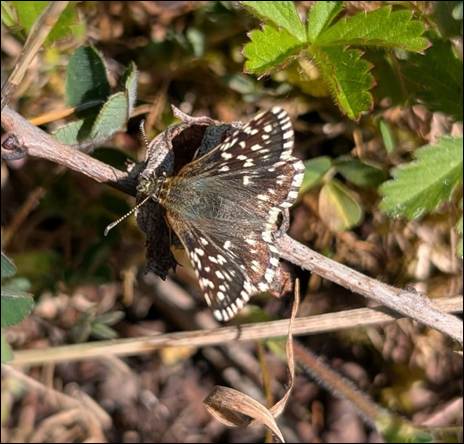
The first Grizzled Skipper of 2026 was spotted on 18th April at Staunton Quarry, and towards the end of the month they were seen nearby at Kilvington Lakes and Flawborough Footpath & Triangle. Since then, they have been reported from across these sites located south of Newark and around East Leake, and lower numbers identified at the end of April at Grange Farm and the Great Central Railway. Unfortunately at the time of writing (12th June 2026), no sightings of the butterfly have been reported from Saxondale, Bingham, Granby or Langar Airfield.
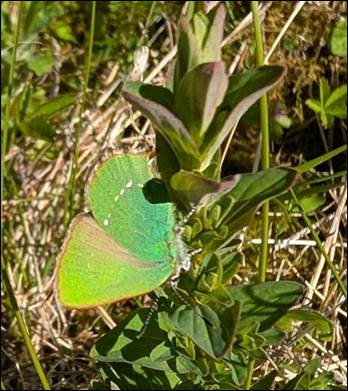
Another LBAP species which was seen at Kilvington Lakes and Staunton Quarry was the Green Hairstreak. This butterfly is usually associated with disused railways and quarry sites, and it is currently found mostly in south Nottinghamshire. It was particularly lovely to see this butterfly here, because from 2004-2013 its numbers were low, but its number have been steadily climbing in recent years, however that may be due to an increase in recorder effort! Either way, it was great to see a number of Green Hairstreaks in this area.
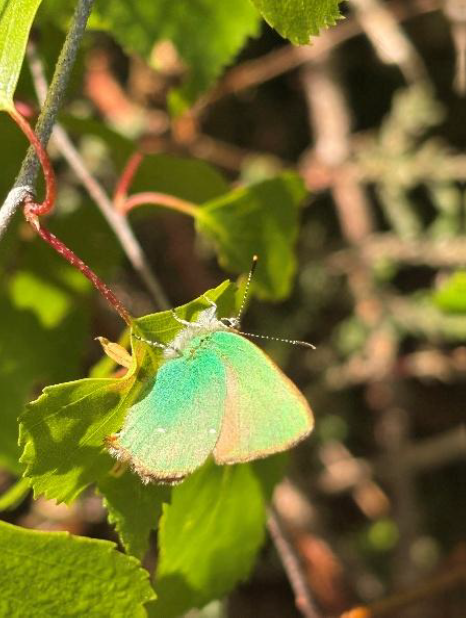
The Green Hairstreak was also recorded on another site at the end of April, where it had not been spotted before – at Center Parcs in Sherwood Forest! It was recorded on one of the heathland sites which Center Parcs are currently restoring and managing, around some gorse bushes. A lot of time and effort has been invested into the management of their heathland site over the last few years, as well as the maintenance of woodland rides and open areas.
Center Parcs also have a rigorous scrub management plan, which aims to maintain a variety of scrub areas of rotation year on year, to support nesting birds, invertebrates and small mammals. The staff here are really pleased to see that their habitat management suits this species, and hopefully this butterfly will make its home here!


Leave a Reply