Siobhan Brocklehurst
Invasive Species Week: Protect Our Ecosystems
If you’ve spent time near rivers, woodlands, or damp green spaces in summer, you may have spotted a tall plant with pink-purple flowers and explosive seed pods—this is Himalayan balsam (Impatiens glandulifera), one of the UK’s most widespread invasive plant species.
This week (June 22nd – June 28th) is Invasive Species Week, we’re highlighting the impact of Himalayan balsam across Nottinghamshire, how to identify it, and what you can do to help tackle it.
What is Himalayan Balsam?
Originally introduced to the UK in the 19th century as an ornamental plant, Himalayan balsam has since spread rapidly and now dominates many riverbanks and wetlands.
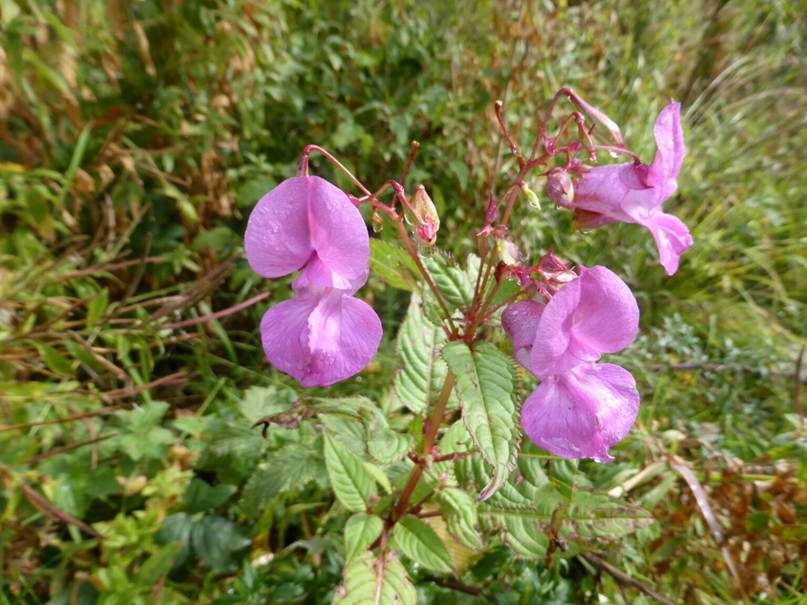
Key identification features:
- Height: Can grow up to 2–3 metres tall
- Flowers: Pink to purple, helmet-shaped blooms (June–October)
- Leaves: Long, narrow, with serrated edges, often in whorls of three
- Stem: Hollow, green to reddish, and easily snapped
- Seed pods: Small, elongated pods that burst explosively when touched, scattering seeds far and wide
Where Does It Grow?
Himalayan balsam thrives in:
- Riverbanks and streamsides
- Wet woodlands
- Ditches and damp grassland
- Disturbed ground
Across Nottinghamshire, it is a growing issue in several parks and green spaces, where it quickly outcompetes native plants.
Why Is It a Problem?
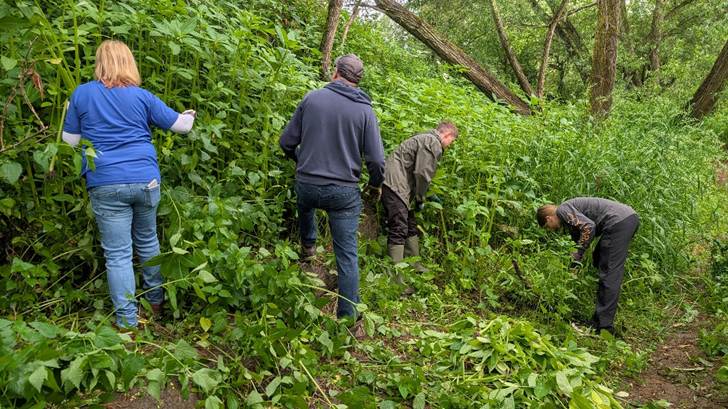
While it may look attractive, Himalayan balsam causes significant environmental damage:
- Outcompetes native plants, reducing biodiversity
- Dies back in winter, leaving bare soil that is vulnerable to erosion
- Contributes to riverbank instability and sediment issues
Managing its spread is essential to protect local ecosystems.
Taking Action: “Balsam Bashing” Sessions
To tackle this issue, we organise practical volunteer sessions where we remove Himalayan balsam by hand. The good news, is that it is VERY easy to pull up, as it has shallow roots, and we either place the pulled plants over tree branches, or pile them all in one place. Also, the plant does not often re-root and grow again, so this method is very powerful regarding its removal.
The KEY to Himalayan Balsam Control is to re-visit these sites and make plans to return to continue removing the plant until you can no longer see it growing. From them onward, it’s a good idea to monitor these sites to make sure that the plant does not make a return.
Very often, it’s the sites which are not re-visited or monitored which become repeatedly overgrown.
Corporate Volunteering Days
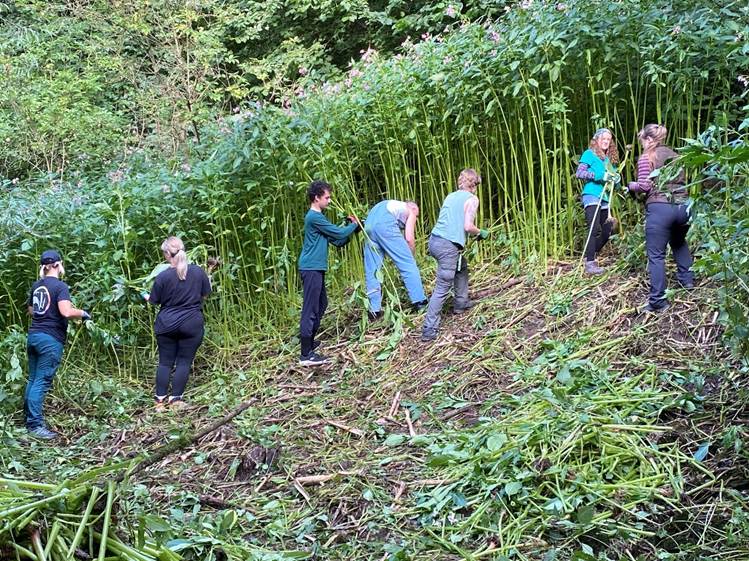
We run dedicated sessions for corporate groups, offering a fantastic opportunity to step outside the office and make a real environmental impact.
These days are:
- Hands-on and practical
- A great way to connect with colleagues
- A chance to enjoy nature and fresh air
- Beneficial for mental health and wellbeing
Many participants find it as much a social experience as a volunteering one, where colleagues enjoy working together, chatting, and seeing immediate results.
Get Involved
Himalayan balsam control is an ongoing project, and we’re always looking for more volunteers to help.
Visit the Nottinghamshire Biodiversity Action Group (Notts BAG) website and check out the Events page to sign up for upcoming evening sessions open to volunteers and the general public.
Interested in joining a group session? Email us at: biodiversity@nottscc.gov.uk
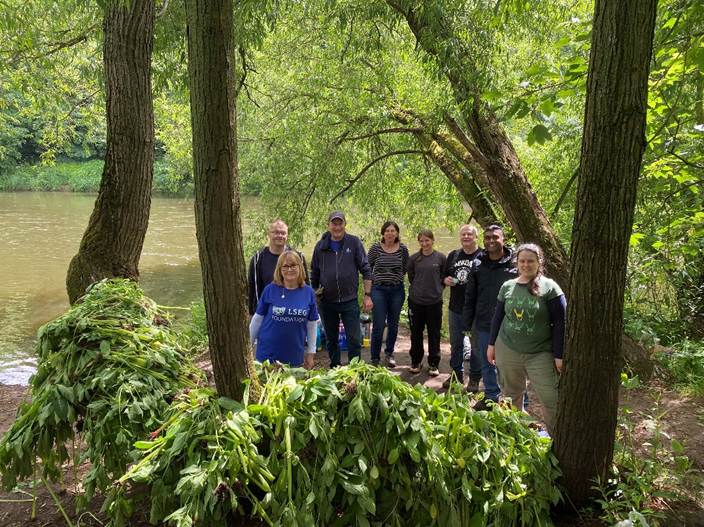
Together We Can Make a Difference
By recognising and removing Himalayan balsam, we can help restore native habitats and protect Nottinghamshire’s green spaces for future generations.
Keep an eye out for this plant on your walks, and if you spot it, you’ll know exactly what you’re looking at!


Leave a Reply