Siobhan Brocklehurst
Wildfires are traditionally associated with the Mediterranean, Australia or California rather than the British countryside. However, after another exceptionally dry summer and numerous UK fires, wildfire is becoming an issue conservationists increasingly need to consider. Wildfires are not new to Britain, but the conditions that allow them to start and spread are changing. Hot, dry weather and drought can dry out grasses, bracken, scrub, leaf litter and other vegetation, creating fuel for fire. Climate change is expected to increase UK wildfire conditions and potentially extend the fire season. This does not mean that wildfires are necessarily caused by climate change. Most UK wildfires are started by human activity, accidentally or deliberately.
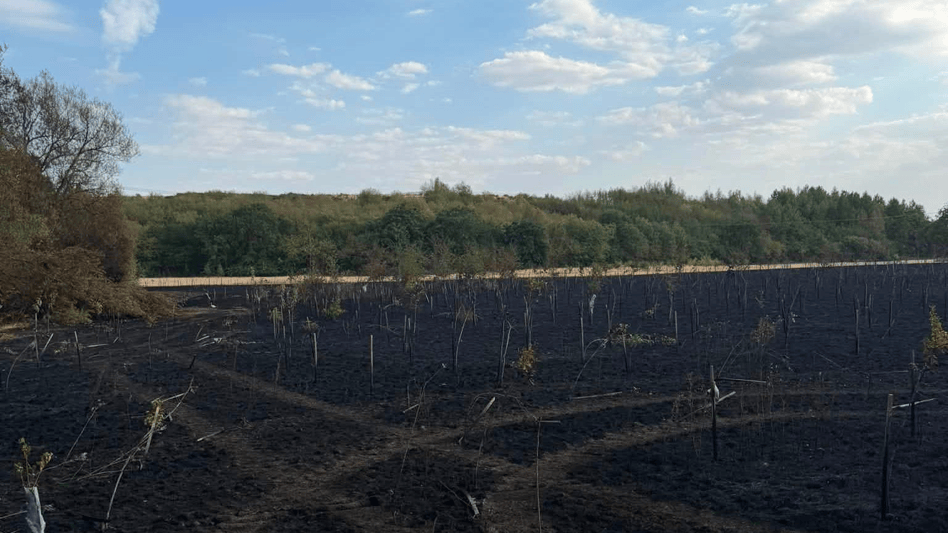
Discarded cigarettes, campfires, barbecues can all provide an ignition source. Prolonged dry weather creates conditions in which that small ignition has a greater opportunity to develop into a serious wildfire.
What does this mean for conservation?
Managing land for wildlife often means retaining habitats that can become very dry. Meadows and species-rich grasslands need vegetation; scrub provides shelter, nesting and feeding habitat; and deadwood is enormously important for fungi, invertebrates and other woodland species.
Simply removing vegetation would therefore harm biodiversity. Instead, conservation managers need to balance wildfire resilience with habitat protection. Measures can include maintaining paths and other breaks in vegetation, managing particularly dense vegetation, ensuring emergency access and considering water sources.
Could it happen here?
Coleorton Wood and New Lount Nature Reserve are both former colliery sites transformed into valuable places for wildlife and local communities, but their habitats are quite different. Coleorton Wood is predominantly woodland, with mown grassy paths. Its Woodland Management Plan already considers environmental threats to the site, including windthrow – the uprooting and overturning of trees – something we have witnessed following strong winds and storms in recent years.
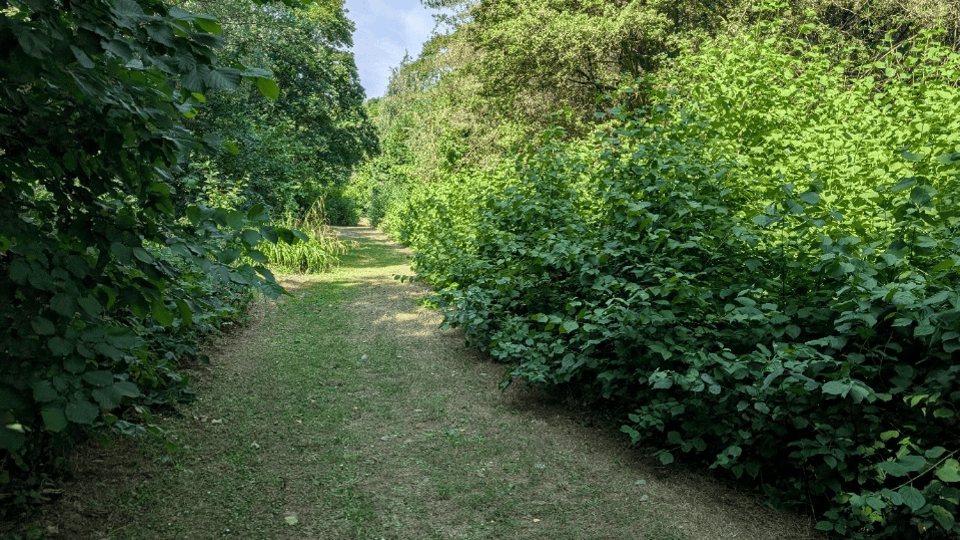
Wildfire is not currently identified as a significant threat. However, some aspects of woodland management are relevant to wildfire resilience. Paths are mown, areas coppiced and woodland is thinned, while deadwood is retained for its ecological value. More than 60 species of fungi have been recorded at Coleorton Wood, many associated with fallen wood. This presents a balance: deadwood can provide combustible material in very dry conditions, but is also an essential woodland habitat. The pond at Coleorton Wood now regularly dries during summer, while channels carrying water through the site require management to prevent blockages. This cannot itself be attributed to climate change, but increasingly dry conditions are something woodland managers will need to consider.
New Lount Nature Reserve is considerably larger, at 19.5 hectares, with a mosaic of woodland, scrub, ponds, meadows and species-rich, nutrient-poor grassland. When we hear ‘wildfire’, it is easy to imagine a forest engulfed in flames, but dry grass, scrub and other vegetation also carry fire rapidly.
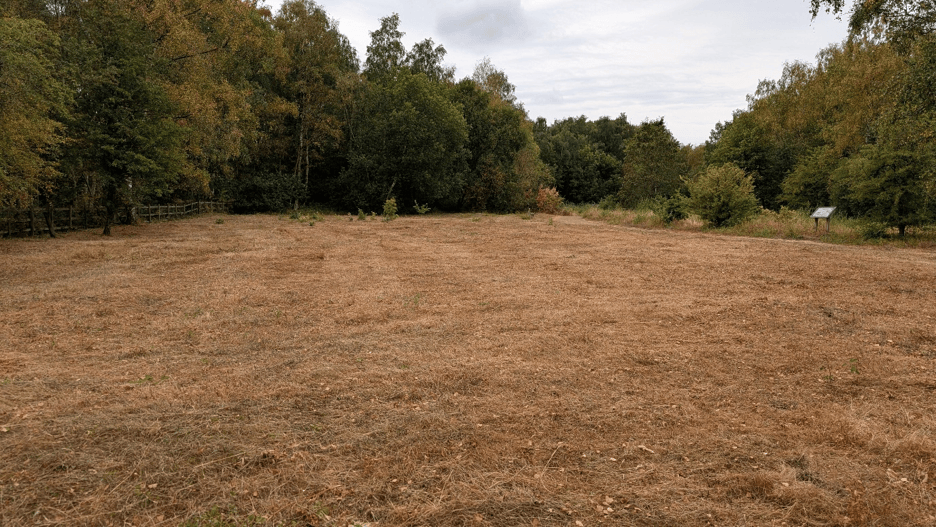
Yet these habitats cannot simply be removed: New Lount’s grasslands are important for wildlife. Management therefore requires balancing habitat protection with changing environmental conditions.
Adapting to a changing climate
Neither Coleorton Wood nor New Lount can be described as being at high risk from wildfire without a specific wildfire risk assessment. They do, however, demonstrate the increasingly complicated challenge of managing our countryside. Conservation has always involved responding to change. At Coleorton Wood we already manage the effects of storms, drainage and watercourses, paths and woodland structure. At New Lount, different habitats require different management to maintain the reserve’s diversity. Wildfire may increasingly become another consideration. This doesn’t mean closely mowing reserves or removing valuable deadwood, scrub and grassland. Instead, it means considering how fire might behave when making decisions about vegetation, access, water and habitat management.
Visitors have a role too. During dry weather, taking care with anything that could cause a spark or flame, disposing of cigarettes safely and never lighting fires or barbecues where prohibited can make a genuine difference. With human activity responsible for the vast majority of UK wildfires, prevention remains one of our most effective forms of protection.
The British countryside has always changed, but some of those changes are presenting conservationists with new challenges. Wildfire may never become a major problem at Coleorton Wood or New Lount, and hopefully it won’t. But as hotter, drier and more extreme weather becomes more common, planning for what could happen may become just as important as managing what we can already see.


Leave a Reply